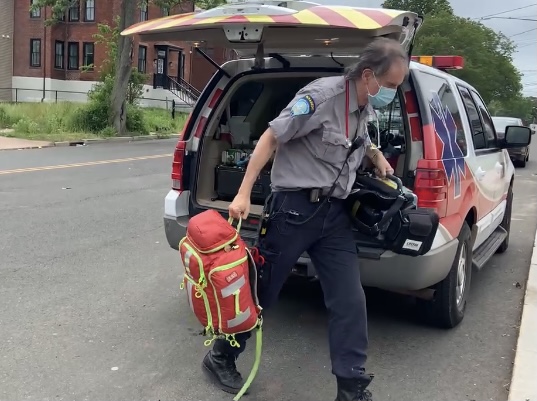
When a law or EMS protocol prevents Peter Canning from doing what he believes is right for his patients, he doesn’t simply accept it. Having worked as a political aide and speechwriter, Peter Canning now serves as a paramedic and EMS coordinator in Hartford, Connecticut, where he knows how to challenge the status quo when necessary. After decades on the front lines of the US opioid crisis, he has learned that saving lives takes more than medical skills. It also takes empathy and the courage to challenge the system.
Duty
Author: Karen Hanne
Pictures: Peter Canning
Peter Canning: A Paramedic on the Front Lines of the Opioid Crisis
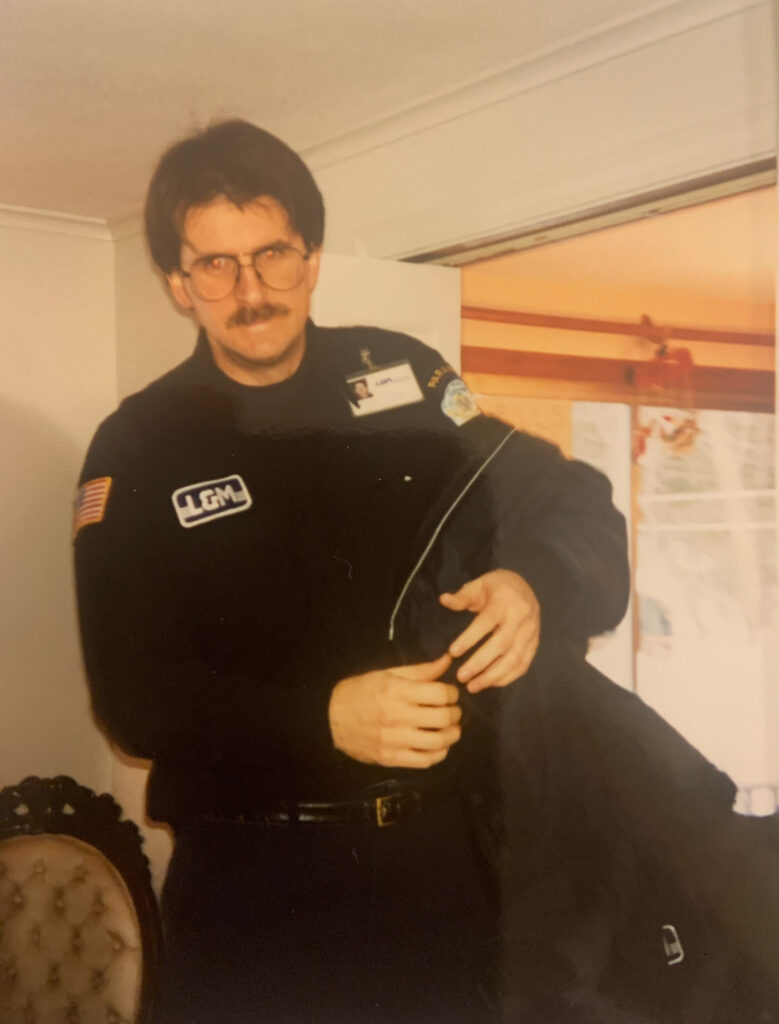
From Politics to Paramedic
How does someone go from working in politics to saving lives as a paramedic? For Peter, several experiences shaped that decision. While living in an urban area in the 1980s, he often saw ambulances responding to emergency calls at night. The popular TV series Emergency! also left a lasting impression, portraying paramedics as everyday heroes who saved lives and served their communities.
When the senator he worked for decided to run for governor, Peter began working in emergency medical services (EMS), took night shifts on ambulances and attended paramedic school. When the governor’s term ended, Peter became a full-time paramedic. “On my first day as an EMT, I remember going to a car accident. It was a pretty bad accident, as cars weren’t as safe in the 1980s as they are now.” Seeing one of the crash victims with a large bruise across his chest, Peter thought to himself: “What have I gotten myself into?” Over time, however, he learned to handle the challenges of emergency medical care. “If you can’t remember what else to do, just remember to put the patient on the stretcher and take them to the hospital.”
30 Years in Emergency Medical Sevices
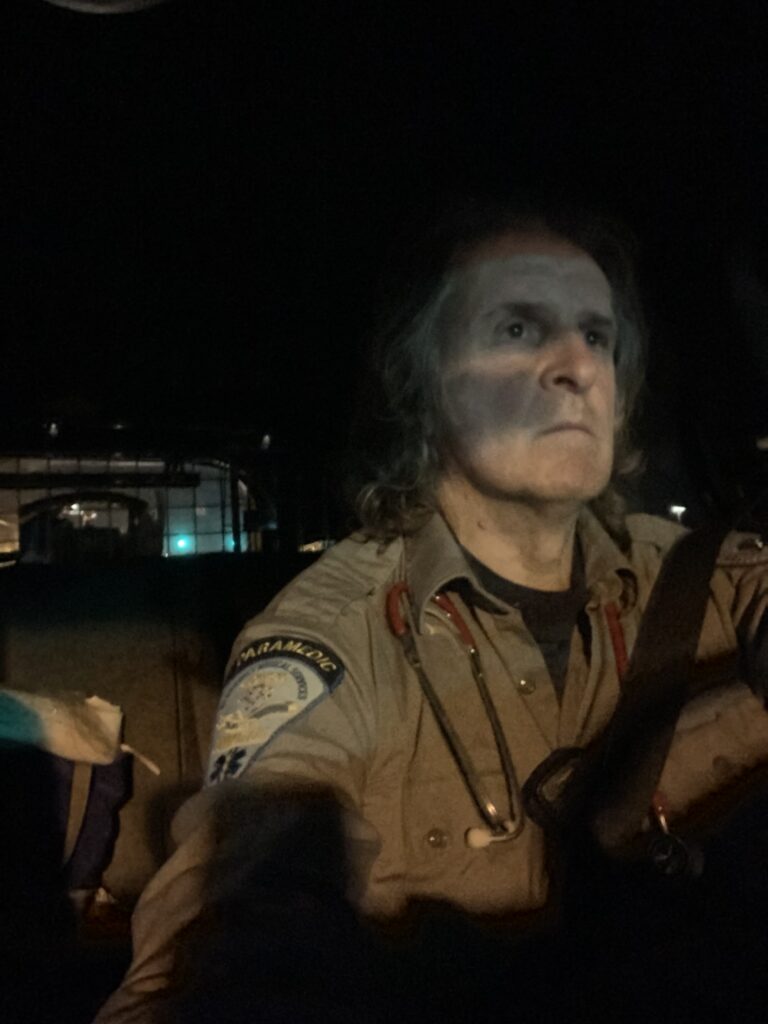
After 30 years of working in the EMS, Peter has come to appreciate a quiet shift. Burnout and emotional detachment are challenges many EMS professionals face, particularly over the course of a long career. Despite these challenges, Peter has never regretted his decision to become a paramedic. “I got really frustrated at times, I still do, but I found my mission in life.” At 68, Peter still works part-time as a paramedic and part-time as an EMS coordinator. “If it was still full-time, I wouldn’t be able to do this job. I have seen people who have been crushed by the exhaustion of 12-hour shifts.”
As an EMS coordinator, Peter reviews the care provided by paramedics and investigates complaints about patient care. “If you just sit behind the desk and read the reports, you only see the protocol. I am still out there, I understand why a person did what they did. You can’t always expect someone to strictly follow protocol, if you don’t know the circumstances that led to certain decisions.” With experience both in administration and in the field, Peter brings a practical perspective to changes in EMS protocols. “If I am in a meeting, I have more authority, because I know what I am talking about.”
While many medical emergencies remain familiar, the work of a paramedic has changed significantly over the past three decades. “The equipment has gotten better. When I started, we had a basic stretcher and you basically had to do a two-man-deadlift to get it into the ambulance. Now stretchers are powered or can even load automatically.” Ambulances are now designed with greater emphasis on safety, diagnostic equipment has improved, and treatment protocols allow for more advanced interventions.
Changing EMS Protocols
When a protocol, regulation, or policy prevents paramedics from providing what Peter believes is the best possible care, he refuses to simply accept the status quo. “It benefitted me that I know how things work.” One such case involved the treatment of patients experiencing prolonged seizures. “When somebody has a seizure for longer than a few minutes, it becomes really dangerous to them.” Medication was available to stop the seizure, but because it was a controlled substance, paramedics needed authorization from a physician before administering it.
“I was saying this is crazy, this is time sensitive. People said ‘but that’s the law’, so I said, let’s change the law.” Knowing that other US states handled the situation differently, Peter pushed for a change to the Connecticut statutes, which regulate emergency medical care across the state. “If it’s your child seizing, I first have to call a doctor, I might not be able to reach one immediately.” Precious minutes could pass before a patient received the medication they needed. The proposed change to the statewide law was approved. “I can speak legislator’s language, but I also know what’s going on in the streets.”
The US Opioid Crisis
“When I started in Hartford in 1995, heroin overdoses weren’t predominant.” Overdoses would usually occur in dark alleys. “I didn’t have empathy back then.” The urge to stay away from people using drugs is probably a feeling most people understand. “With time, I noticed a lot more overdoses, everywhere, not only in alleys and the inner city. That’s when I started asking people, how they got started using this drug.”
That was when Peter began to understand that overdose victims never chose this fate. He heard stories of football injuries or of a man who had fallen from a ladder and needed back surgery. “Nearly everybody had a story, a point in life that set them down this path.” During the 1990s and 2000s, prescription painkillers were pushed by pharmaceutical companies. Some were misleadingly marketed as having a low risk of addiction, despite their potential to cause exactly that. Some patients developed opioid dependence and, when their prescriptions ended, turned to illicit opioids such as heroin.
The Stories behind the people
“Hearing these stories made me more empathetic towards them.” Opioid use disorder is a medical condition, not a moral failing. Repeated opioid use can alter the brain circuits involved in reward and motivation. “I felt bad for the patients, about how they were treated by others.” Overdose deaths rose dramatically over the following decades, with the spread of illicitly manufactured fentanyl making the crisis even more dangerous.Fentanyl is more potent than heroin. “A bag of fentanyl can be filler and two percent fentanyl, or it can be ten percent fentanyl, or none at all. There is no consistent dose.” This unpredictability significantly increased the risk of a fatal overdose.
Deaths skyrocketed – and a lot of them could have been prevented. Naloxone can reverse the effects of an opioid overdose. But for naloxone to save a life, someone must be there to recognize the overdose and administer it in time. “Instead of telling people to stop using drugs because they’ll end up in jail, I prefer telling them to not use alone.” If someone experiences an opioid overdose, having another person nearby who can administer naloxone and call emergency services can mean the difference between life and death. Changes to EMS protocols also allowed paramedics to leave naloxone kits with family members, friends, and outreach workers.
Breaking the Sigma
“People think taking drugs is a choice, but nobody wakes up and decides they are going to be an addict.” People with substance use disorders deserve the same dignity, compassion, and access to healthcare as anyone else. Why are people whose opioid dependence began with prescribed medication criminalized rather than offered the help they need? There are ways to support their recovery, help them find employment, and enable them to participate in society.
The language we use and the way we treat people with substance use disorders play a crucial role in breaking down stigma. “Don’t call someone an abuser.” Such language reinforces prejudice and can deepen the shame and isolation experienced by people living with addiction. “Opioids help take the pain away – physical and mental. If you call somebody dirty or a junkie, if you look down on them, they will be even more isolated.”
Peter remembers the story of a kid whose friend was killed in a school shooting. The boy, Austin, got injured and was prescribed opioids for the pain. But the drugs also helped with the emotional suffering. He developed an opioid dependency, lost his connection to his family, and eventually began rebuilding his life after ten years.
He became a speaker, sharing his experiences and helping others understand addiction. Yet, just weeks after giving a speech, he died of an overdose. “How would his life have been if he hadn’t been injured as a kid?”
After years of working with people affected by addiction, Peter understood that anyone could be affected. Society often looks down on people who use drugs, overlooking the fact that addiction can affect people from all walks of life. “Being in the EMS has been a wonderful, great profession. It is truly a privilege to see humanity at its best and worst state. At the end of the day, I made a difference.”
How Community can save lives
Creating a sense of belonging and reducing social isolation are important parts of harm reduction and recovery. Some communities operate supervised consumption sites, where people can use drugs under trained supervision. In some harm reduction programs, staff monitor occupied bathrooms and check on individuals if they fail to respond within a set period of time. This allows staff to respond quickly and effectively to a suspected overdose.
In the United States, publicly sanctioned overdose prevention centers have opened in New York City and Providence, Rhode Island, offering safer environments and access to support services. Beyond providing a safer environment for drug use, these centers offer opportunities for human connection and social support.“The people go in there with their heads down.” However, after a few times they start talking to each other, building a sense of community. Looking ahead, Peter hopes to see more state-sanctioned overdose prevention centers across the country. “Overall, I hope we can better educate people about the science of addiction and get rid of the stigma. If everyone treated people with kindness, this wouldn’t be such a big problem.”
Mehr spannende Stories vom nordamerikanischen Kontinent sind hier: Eis und Feuer – Als Hubschrauberpilot unterwegs in der kanadischen Arktis